
Malfunctioning Road Signals: Pedestrian Accident Risks
Whether you've been injured in an accident, are dealing with a personal injury claim, or facing another legal issue, Mendez & Sanchez APC is here to fight for you. Contact us today for a free, no-obligation consultation.
Call Us Now
Pedestrian accidents are a serious problem in many cities around the world. In many cases, these accidents are caused by malfunctioning road signals and signage. When these critical safety features fail, pedestrians can be put at risk, leading to injury or even death.
Pedestrian accidents due to malfunctioning road signals and signage can occur for a variety of reasons. Some common issues include:
Faulty traffic signals:
Traffic signals are designed to regulate the flow of vehicles and pedestrians at intersections. However, when these signals malfunction, they can create confusion and lead to accidents. Some examples of faulty traffic signs include:
- A stop sign that is obscured by foliage or other objects, making it difficult to see for drivers approaching the intersection.
- A yield sign that is missing or damaged, leading to confusion among drivers and potentially causing accidents.
- A speed limit sign that is faded or difficult to read, making it difficult for drivers to know what speed they should be traveling.
- A one-way sign that is missing or obscured, leading to drivers traveling in the wrong direction on a one-way street.
- A pedestrian crossing sign that is missing or faded, making it difficult for drivers to know when they need to yield to pedestrians crossing the street.
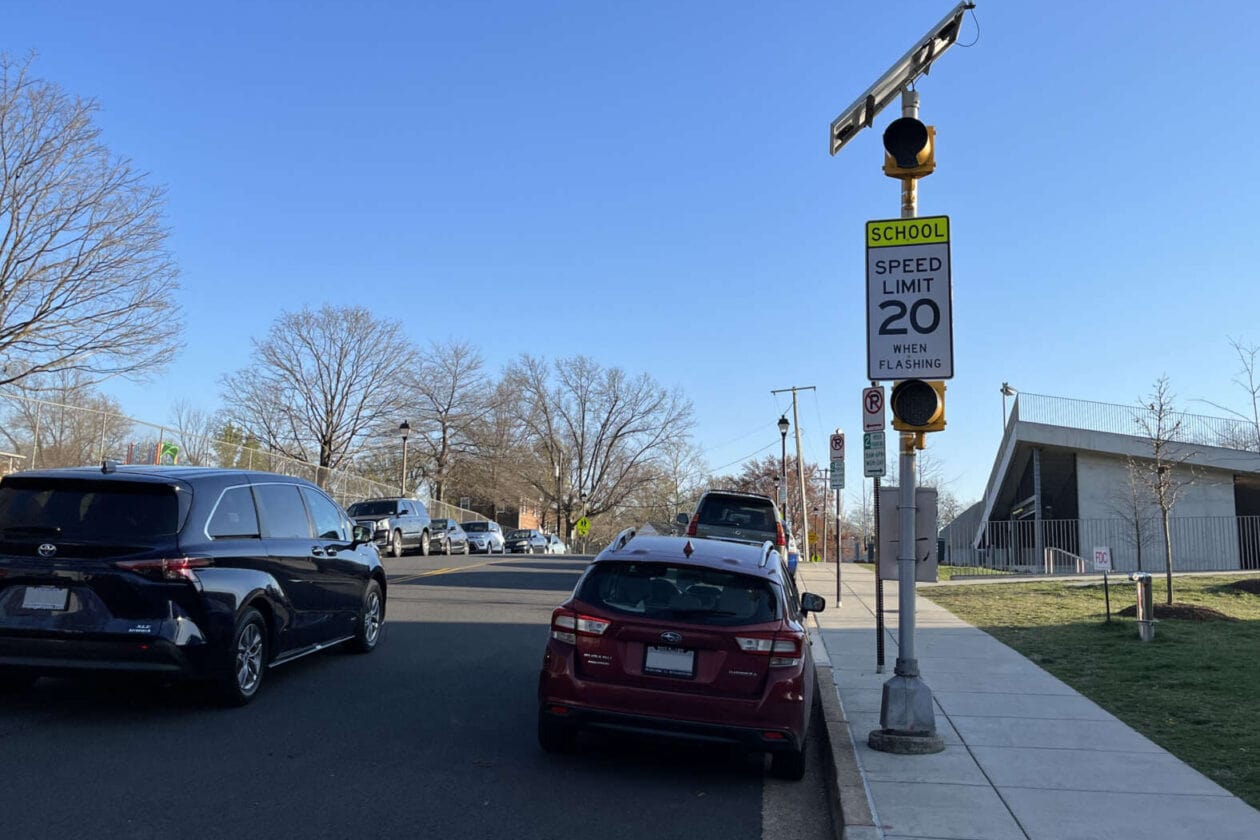
- A school zone sign that is damaged or missing, potentially putting children at risk as they cross the street near a school.
- A construction zone sign that is missing or damaged, potentially causing drivers to speed through a dangerous area.
These are just a few examples of the types of faulty traffic signs that can put drivers, pedestrians, and construction workers at risk. It is important to report any issues with traffic signs to local authorities as soon as possible to help prevent accidents.
Missing or obscured signage:
Road signs are critical for providing direction and warning to drivers and pedestrians. When these signs are missing or obscured, it can be difficult for pedestrians to navigate safely.
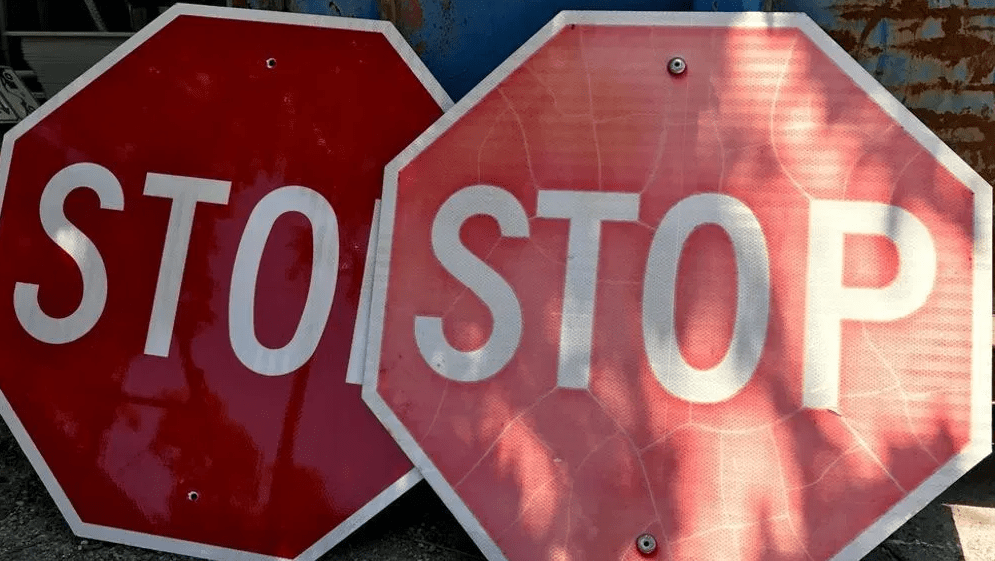
- A stop sign that has been knocked down or removed, making it difficult for drivers to know when they need to stop at an intersection.
- A yield sign that has been covered by foliage or graffiti, making it difficult for drivers to see and potentially causing accidents.
- A speed limit sign that is missing or has been knocked over, making it difficult for drivers to know what speed they should be traveling.
- A one-way sign that is missing or obscured, leading to drivers traveling in the wrong direction on a one-way street.
- A pedestrian crossing sign that is missing or obscured, making it difficult for drivers to know when they need to yield to pedestrians crossing the street.
- A road work ahead sign that is missing or obscured, potentially causing drivers to speed through a dangerous construction zone.
- A detour sign that is missing or obscured, potentially causing drivers to become lost or disoriented.
These are just a few examples of missing or obscured signage that can lead to confusion and potentially cause accidents. It is important for local authorities to ensure that all traffic signs and signals are clearly visible and in good condition to help prevent accidents on the roadways.
Poorly maintained road markings:
Road markings, such as crosswalks and pedestrian symbols, are critical for alerting drivers to the presence of pedestrians. When these markings are faded or poorly maintained, they can be difficult to see, leading to accidents.
- Faded or worn out lane markings that make it difficult for drivers to know where the lanes are on the road, potentially leading to accidents.
- Missing or obscured center lines that make it difficult for drivers to stay in their own lane, potentially causing head-on collisions.
- Worn out or missing crosswalk markings that make it difficult for pedestrians to know where it is safe to cross the street, potentially leading to pedestrian accidents.
- Faded or missing stop lines at intersections that make it difficult for drivers to know where to stop, potentially causing accidents.
- Worn out or missing turning arrows that make it difficult for drivers to know when it is safe to turn, potentially causing accidents.
- Faded or missing pavement markings indicating a no parking zone, causing confusion among drivers and potentially leading to blocked emergency vehicle access.
These are just a few examples of poorly maintained road markings that can lead to confusion among drivers, cyclists, and pedestrians, and potentially cause accidents. It is important for local authorities to regularly inspect and maintain road markings to ensure that they are clearly visible and in good condition to help prevent accidents on the roadways.
In many cases, pedestrian accidents due to malfunctioning road signals and signage can be prevented with proper maintenance and repair. However, when accidents do occur, it is important to understand your legal rights and options.
If you have been injured in a pedestrian accident due to malfunctioning road signals and signage, you may be entitled to compensation for your injuries. This may include medical expenses, lost wages, and pain and suffering. However, navigating the legal system can be complex and challenging, especially when dealing with a serious injury.
This is where a qualified attorney can help. Attorneys who specialize in personal injury law can assist with all aspects of your case, from filing a claim to negotiating a settlement with insurance companies. They can help you understand your legal rights and options, and guide you through the complex legal process.
An experienced attorney can also help you gather the evidence necessary to support your claim, such as eyewitness testimony and police reports. They can work with accident reconstruction experts to help establish liability for your injuries.
When negotiating a settlement, attorneys can advocate on your behalf to ensure that you receive the compensation you deserve for your injuries, including medical expenses, lost wages, and pain and suffering. They can also help ensure that any future medical expenses related to your injury are taken into account in the settlement.
In addition to legal representation, attorneys can provide valuable emotional support throughout the process. They can help you cope with the stress and anxiety that often accompanies a personal injury case and provide guidance on how to move forward with your life after your injury.
If you or a loved one has been injured in a pedestrian accident due to malfunctioning road signals and signage, it is important to seek the advice of a qualified attorney. They can help ensure that your legal rights are protected and that you receive the compensation you deserve for your injuries. With the help of an attorney, you can focus on your recovery and getting back to living your life to the fullest.
Frequently Asked Questions
Who is legally responsible if a broken traffic signal caused a driver to hit me while I was crossing the street in California?
Liability for a malfunctioning traffic signal in California can fall on the government agency responsible for maintaining that road — often the city, county, or Caltrans — under California Government Code Section 835, which holds public entities liable for dangerous conditions on public property when they had notice of the problem and failed to repair it. In some cases, a private contractor hired to maintain traffic infrastructure can also share liability. Because government claims have strict procedural rules, it is critical to act quickly and preserve evidence like photos of the malfunctioning signal and any witness contact information.
How long do I have to file a claim after being hit by a car at a crosswalk with a broken signal in California?
If a government agency like a city or county is responsible for the malfunctioning signal, California's Government Claims Act (Government Code Section 911.2) requires you to file an administrative claim within just 6 months of the accident — far shorter than the standard civil deadline. If your claim is denied or ignored, you then have 6 months to file a lawsuit. For claims against private parties only, California's general personal injury statute of limitations under CCP 335.1 gives you 2 years from the date of injury, but don't wait — evidence disappears and witnesses forget details quickly.
What kind of compensation can I get if a faded crosswalk marking contributed to my pedestrian accident?
In California, pedestrian accident victims injured due to poorly maintained road markings may be entitled to economic damages — including medical bills, future treatment costs, lost wages, and reduced earning capacity — as well as non-economic damages like pain and suffering, emotional distress, and loss of enjoyment of life. In cases where a government agency showed reckless disregard for a known dangerous condition, additional compensation may be available. Settlements in serious pedestrian accident cases in California frequently range from tens of thousands to several million dollars depending on the severity of injuries, so consulting an attorney to value your specific claim is essential.
Can I still recover money if I was partly at fault for the pedestrian accident, like if I was jaywalking when the signal was broken?
Yes — California follows a pure comparative negligence rule under Civil Code Section 1714, meaning you can still recover compensation even if you were partially at fault for the accident. Your total damages award is simply reduced by your percentage of fault, so if a jury finds you were 30% at fault and a negligent government agency was 70% at fault, you still recover 70% of your total damages. This is actually more favorable than many other states that bar recovery entirely if you're over 50% at fault, so even pedestrians who weren't acting perfectly should explore their legal options.
What should I do immediately after a pedestrian accident caused by a missing or broken road sign to protect my case?
The most important steps are to call 911 so a police report is generated, photograph the malfunctioning or missing sign from multiple angles before anything is repaired, and get the names and contact information of any witnesses at the scene. Seek medical attention immediately — even if you feel okay — because delayed symptoms are common in pedestrian accidents and gaps in medical care can be used against you later. Do not give recorded statements to any insurance company before speaking with a personal injury attorney, as early statements can be taken out of context and used to minimize your claim.
Does the city have to have known about the broken signal ahead of time for me to sue them in California?
Generally yes — under California Government Code Section 835, to hold a public entity liable for a dangerous road condition, you typically must show that the agency had actual or constructive notice of the problem and had enough time to fix it before your accident. Constructive notice means the condition existed long enough that a reasonable inspection would have discovered it, even if no one formally reported it. However, if the signal was malfunctioning for days or weeks before your accident, or if prior complaints were logged with the city, that evidence can establish constructive notice and significantly strengthen your claim.
I've heard government agencies are hard to sue — is it even worth pursuing a claim against a city for a bad traffic signal in California?
It is absolutely worth pursuing, and experienced personal injury attorneys handle these claims regularly in California despite the added procedural steps. While the Government Claims Act does create extra hoops — like the 6-month administrative filing deadline under Government Code Section 911.2 — public entities in California do settle and pay out claims for dangerous road conditions, including defective signals and missing signage. Cities like Los Angeles, San Diego, and San Francisco have paid significant settlements in pedestrian accident cases tied to infrastructure failures, and having an attorney who understands the government claims process dramatically improves your chances of a successful outcome.