
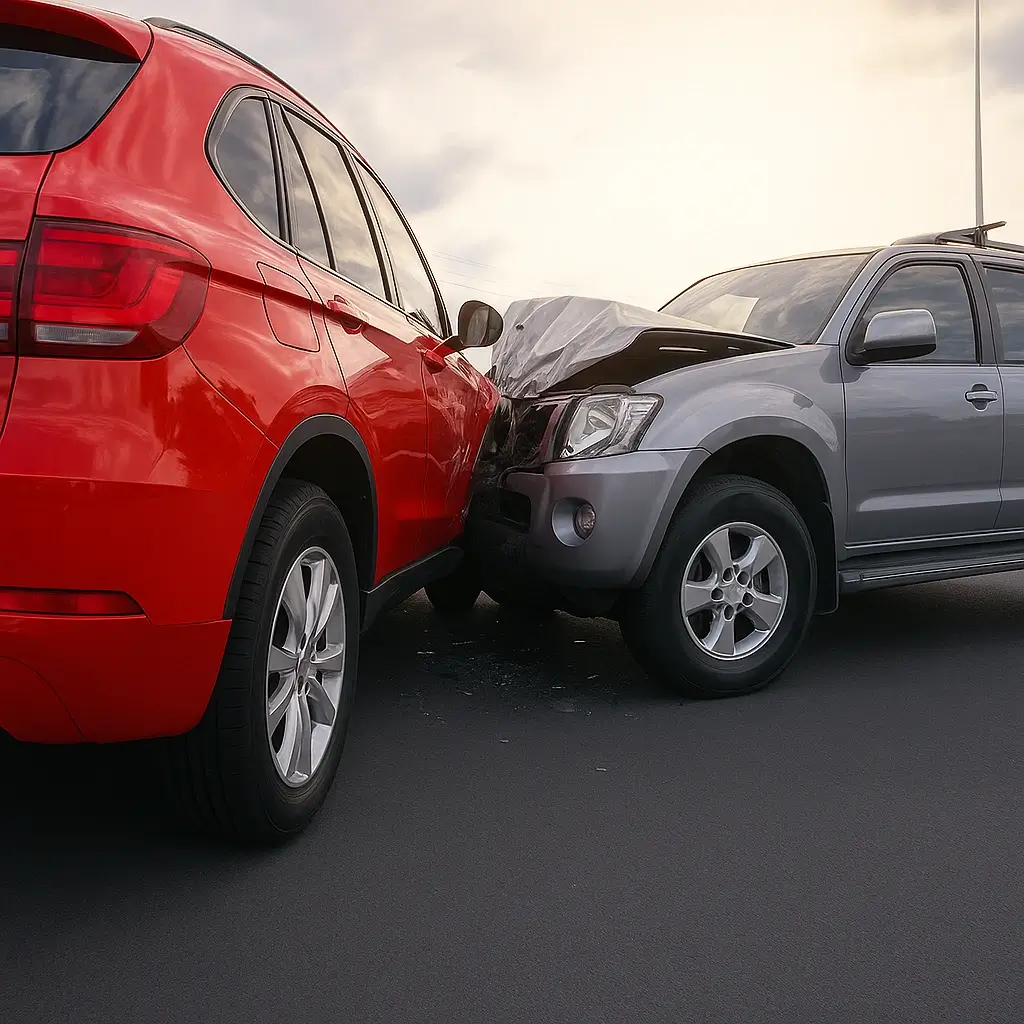
If you were just rear-ended, do these four things immediately: call 911, stay at the scene, document everything you can with your phone, and see a doctor that same day even if you feel okay. What you do in the hours and days after a rear-end collision has a direct impact on whether you can recover money for your medical bills, lost wages, and pain. This page walks you through each step clearly.
Step 1: Call 911 and Stay at the Scene
Call 911 right away, even if the crash looks minor. A police report creates an official record of what happened, who was involved, and what the officer observed. In California, you are required by law to stop and remain at the scene of any accident that causes injury or property damage. Leaving — even briefly — can expose you to hit-and-run charges and will seriously damage any future claim.
When the officer arrives, give an accurate account of what happened. Do not speculate or guess. If you are not sure about something, say so. Avoid saying you feel fine — adrenaline masks pain, and symptoms like whiplash, concussions, and soft-tissue injuries often appear hours or days later.
Step 2: Gather Evidence at the Scene
While you wait for police to arrive, document as much as possible using your phone:
- Photos of both vehicles — all four sides, close-ups of damage, license plates
- The road and intersection — skid marks, traffic signals, road conditions, weather
- The other driver's insurance card and license — photograph both
- Names and phone numbers of any witnesses — bystanders often leave before police arrive
- The officer's name and badge number — ask how to get a copy of the report
If your car has a dashcam, do not delete or overwrite the footage. Save it immediately. If the other driver's vehicle has a dashcam or there are traffic cameras nearby, note that — your attorney can request that footage before it gets erased.
Step 3: See a Doctor the Same Day
This is the single most important thing you can do after a rear-end crash. Whiplash is the most common rear-end injury, and it frequently does not cause obvious pain until 24 to 72 hours after impact. The same is true for herniated discs, concussions, and shoulder injuries. If you wait days to see a doctor, the other side's insurance company will argue your injuries were not caused by the crash — or were not serious.
Go to an emergency room, urgent care, or your primary care doctor the same day. Tell them exactly how the accident happened and every part of your body that feels off, even mildly. That medical record becomes a foundation for your claim. Follow every treatment recommendation your doctor gives you. Gaps in treatment are one of the most common ways insurance companies reduce payouts.
Step 4: Do Not Speak to the Other Driver's Insurance Company
You will likely get a call from the other driver's insurance adjuster within 24 to 48 hours. They may sound friendly and sympathetic. Their job is to pay out as little as possible. Do not give a recorded statement. Do not accept any settlement offer before you have finished medical treatment and know the full extent of your injuries.
In California, even a small upfront settlement — sometimes as low as a few hundred dollars — comes with a release that permanently signs away your right to any future compensation, even if your injuries turn out to be far more serious. You are not required to speak to the other driver's insurance company at all. Refer them to your attorney.
Who Is at Fault in a California Rear-End Accident?
California law presumes the rear driver is at fault in most rear-end collisions because every driver has a duty to maintain a safe following distance and pay attention to traffic ahead. That said, fault is not always 100 percent on the rear driver. If the front driver cut off the rear driver, brake-checked them, or had broken brake lights, fault can be shared.
California follows a rule called pure comparative negligence. This means that even if you were partially at fault — say, 20 percent — you can still recover 80 percent of your damages. The insurance company may try to inflate your share of fault to lower their payout. Having documented evidence and a clear account of what happened protects you from that tactic.
How Long Do You Have to File a Claim in California?
For most rear-end accidents involving a private driver, California gives you two years from the date of the crash to file a personal injury lawsuit. Miss that deadline and you lose the right to recover anything, no matter how serious your injuries are.
If the driver who hit you was operating a government vehicle — a city bus, a county maintenance truck, a school district van — the deadline is much shorter. You must file a formal government claim within six months of the accident. This is not a lawsuit; it is a required notice before any lawsuit can proceed. Missing the six-month window almost always bars your claim entirely.
Even if you think your injuries are minor, do not wait. Evidence disappears, witnesses forget details, and medical records get harder to connect to the crash over time.
What Can You Recover After a Rear-End Crash?
California law allows you to seek compensation for:
- Medical bills — emergency care, imaging, physical therapy, future treatment
- Lost wages — time missed from work while recovering
- Reduced earning capacity — if your injury limits what you can do long-term
- Pain and suffering — the physical pain and emotional impact of the injury
- Property damage — repair or replacement of your vehicle
Rear-end crashes at even low speeds can cause injuries that require months of treatment. Do not let an insurance company's first offer define what your case is worth.
What Mendez & Sanchez APC Does for Rear-End Accident Victims
Our firm has handled hundreds of rear-end accident cases across California. We gather evidence, deal with the insurance companies so you do not have to, and build a clear picture of how this crash affected your life — medically, financially, and personally. You pay nothing unless we recover money for you. If you were rear-ended and want to know what your next step should be, call us or fill out the form on this page. We respond quickly, in English and Spanish.