
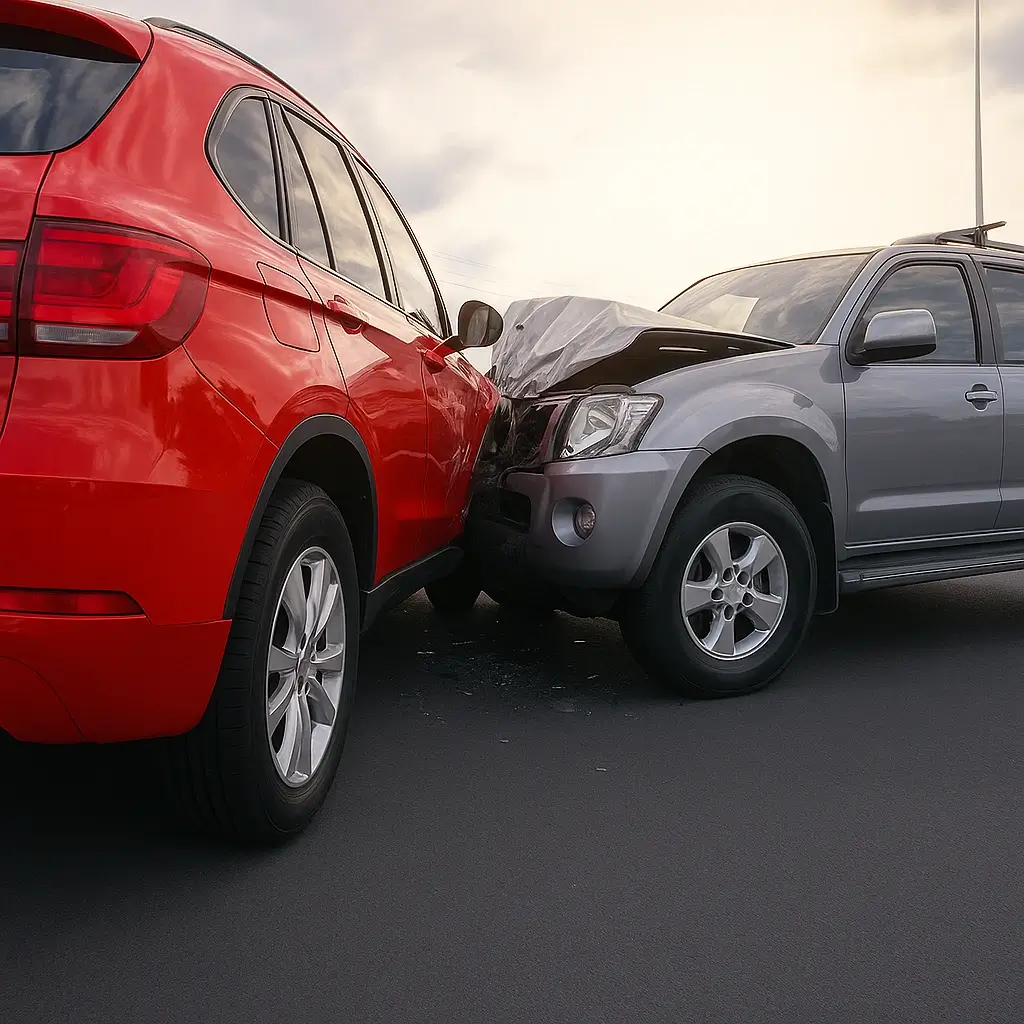
If you were hit by a driver who drove away, you still have real options for recovering your losses — even if you never find out who hit you. In California, your own auto insurance, uninsured motorist coverage, and in some cases witnesses or surveillance footage can be the path to compensation. The steps you take in the next few hours matter more than almost anything else.
Step 1: Stop, Stay Safe, and Call 911
If you were driving, pull over to a safe location immediately. California law (Vehicle Code Section 20002) requires you to stop and remain at the scene — even if the other driver fled. Call 911 and report the accident. A police report is not just useful; it is often required by your insurance company to file a hit and run claim. Tell the dispatcher the direction the driver fled, the vehicle color, make, or any part of the license plate you caught.
If you are injured, do not move unless you are in immediate danger. Tell the 911 operator about your injuries so paramedics are dispatched along with police.
Step 2: Gather Everything You Can Right Now
While you wait for police, collect as much information as possible. The window closes fast:
- Photograph your vehicle from every angle, including close-ups of the damage and paint transfer from the other car.
- Photograph the scene — skid marks, debris, road conditions, traffic signals, and any nearby businesses or cameras.
- Write down or record verbally everything you remember about the other vehicle: color, body style, any part of the plate, distinguishing features, and the direction it fled.
- Get witness information. Ask anyone nearby if they saw what happened and get their name and phone number. Witnesses often leave before police arrive.
- Note nearby businesses and homes. A gas station, ATM, Ring doorbell, or traffic camera could have captured the fleeing vehicle on video. This footage is often overwritten within 24 to 72 hours.
Step 3: Report the Hit and Run Within 24 Hours
California requires you to report any accident involving injury, death, or property damage over $1,000 to the DMV within 10 days using a SR-1 form. But for insurance purposes, you should notify your own insurance company about the hit and run as soon as possible — ideally the same day. Most policies require prompt reporting, and delays can give insurers a reason to reduce or deny your claim.
If the police do not come to the scene (which sometimes happens for property-damage-only crashes), you can file a report directly at your local California Highway Patrol office or police department within 24 hours.
Step 4: See a Doctor, Even If You Feel Okay
Adrenaline masks pain. Injuries like whiplash, soft tissue damage, and even concussions often do not show full symptoms until 24 to 72 hours after a crash. If you skip the doctor and symptoms appear later, the insurance company will argue your injuries were caused by something else entirely.
Go to an emergency room, urgent care, or your primary doctor the same day if at all possible. Keep every record — discharge papers, prescriptions, referrals, and bills. These documents form the backbone of your damages claim.
How You Can Still Be Compensated When the Driver Is Unknown
A hit and run does not mean you walk away with nothing. California law gives you several paths to recovery:
- Uninsured motorist (UM) coverage: If you have UM coverage on your policy, it applies to hit and run accidents. California requires insurance companies to offer this coverage, though drivers can decline it in writing. If you have it, this is often your primary recovery source.
- Collision coverage: If you have collision coverage, it pays for your vehicle damage regardless of who was at fault or whether they are identified.
- The driver is found later: Police do solve hit and run cases — especially when there is camera footage or witnesses. If the driver is identified, you can pursue their liability insurance or file a lawsuit directly against them. In California, you have two years from the date of the accident to file a personal injury lawsuit (Code of Civil Procedure Section 335.1).
- Government liability: If a dangerous road condition contributed to the accident — a poorly timed light, missing signage, or a defective road surface — you may have a claim against a city or county. These claims must be filed within six months of the accident under the California Government Claims Act, so this deadline must not be missed.
What California's Comparative Fault Rule Means for You
California follows a pure comparative negligence rule. This means even if you were partially at fault for the accident, you can still recover compensation — it is just reduced by your percentage of fault. For example, if you were found 20% at fault and your damages total $100,000, you can still recover $80,000. Do not assume that because you may have contributed in some way, you have no claim. That determination is made after a full look at the facts.
Why Talking to a Lawyer Before the Insurance Company Matters
Your own insurance company is not your enemy, but it is not fully on your side either. Adjusters are trained to settle claims for as little as possible. Before you give a recorded statement or accept any payment offer, it is worth understanding what your claim is actually worth — including future medical expenses, lost income, and pain and suffering.
An experienced attorney can also help preserve evidence quickly, identify all available insurance sources, and handle communications so nothing you say is used to minimize your recovery. Hit and run cases involve tight deadlines and multiple moving parts. Having someone navigate that on your behalf while you focus on healing makes a real difference.
Mendez & Sanchez APC Has Handled Hit and Run Cases Across California
Our team has recovered over $1 billion for accident victims — including drivers, passengers, cyclists, and pedestrians hit by drivers who fled the scene. We know how to build a case when the at-fault driver is unknown, and we know how to push back when insurance companies try to undervalue what happened to you.
You pay nothing to speak with us, and nothing at all unless we win. If you were hurt in a hit and run, reach out today. The earlier we get involved, the more we can do.